
Approximately 1471 photographs of the initial excavations Khirbet Qumran and its vicinity, including the caves, were taken by John Marco Allegro, from his arrival in Jerusalem in October 1953 through to his ‘Search in the Desert’ work in the 1960s. This entire collection was donated to the Manchester Museum by Mrs Judith Brown. John Allegro’s daughter, and later made available as microfiche images published by George Brooke and Helen Bond: The Allegro Qumran Photograph Collection: Supplement to the Dead Sea Scrolls on Microfiche (ed. G. Brooke with H.K. Bond; Leiden, New York & Köln, E.J. Brill and IDC, 1996). As part of the project’s commitment to study archival documentation and photographs, these images are being digitized as part of the Network project’s activities by Sandra Jacobs.

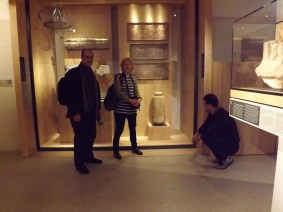 The Network meeting in Paris was attended by all partners: Joan Taylor, Marcello Fidanzio and Dennis Mizzi, along with Network Facilitator Sandra Jacobs. It was decided in order to have a Network meeting coinciding with practical work visiting the Qurman jar at the Musée du Louvre for close examination.


 Dispersed Qumran Cave Artefacts and Archival Sources (DQCAAS)